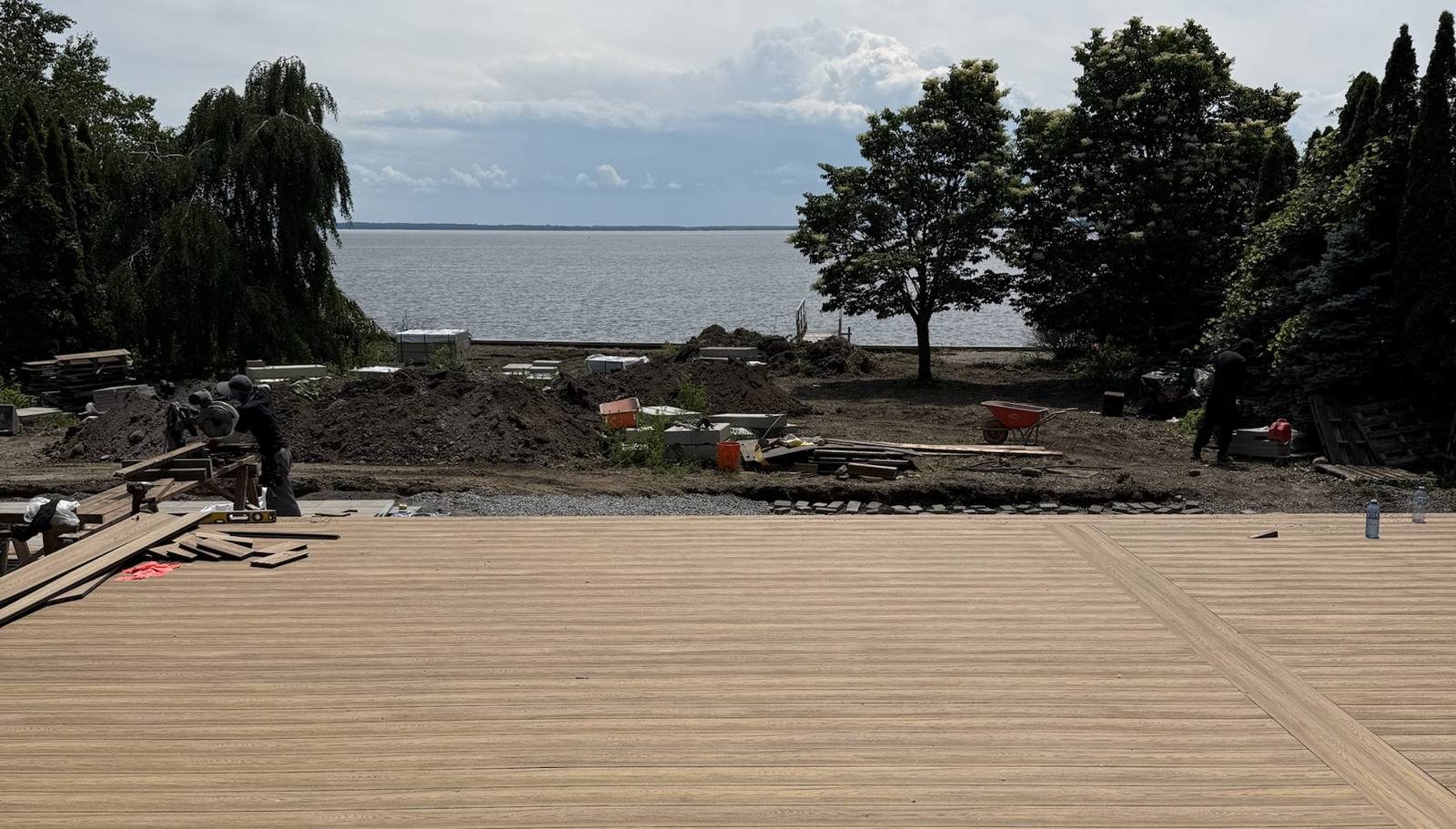
Winter care
How to clear snow from a composite deck without damage, use salt sparingly and clean it in spring. A guide for Quebec winters.
Upkeep, winter, price and limits: a straight comparison to help you decide.
It's the first question almost every customer asks. Here's an honest comparison, with the strengths and limits of each material.
Pressure-treated wood needs regular cleaning and staining or sealing, often every two or three years, to keep it from greying, splitting and splintering. Our composite boards have a protective shell that resists stains, fading and moisture. They never need sanding, painting or staining. Soap and water is enough.
Wood absorbs water, and water freezing inside the fibres works the board and speeds up cracking. In independent lab testing, our boards absorbed 0.22% water after 28 days fully underwater. Less water absorbed means less water freezing inside the board. See our winter care guide.
Pressure-treated wood costs less up front, no question. Composite costs more at the start, but you stop buying stain and spending weekends sanding. To compare, add the purchase price and upkeep over the years you plan to keep the deck. Because we import directly, with no brand middleman, our price per square foot is often lower than the big brands at the store. Get a quote to compare with your own numbers.
Our deck boards carry a 25-year limited manufacturer's warranty for residential use. See the warranty.
If you want the lowest purchase price and don't mind staining, pressure-treated wood does the job. If you'd rather spend summers on the deck than maintaining it, composite is the better long-term choice.
How to clear snow from a composite deck without damage, use salt sparingly and clean it in spring. A guide for Quebec winters.
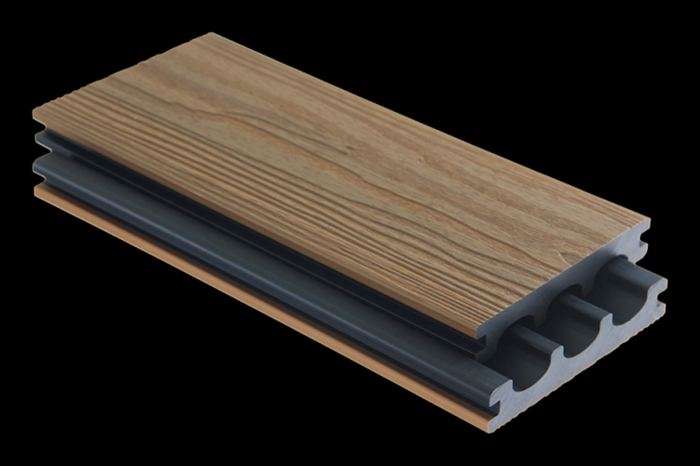
How solid and bridged (scalloped) composite deck boards differ: weight, price, exposed edges, rooftop use. And how to combine them.
Solid or bridged composite deck boards, 12 or 16 ft, in Birch, Smoky Grey or Oak. Hidden fasteners and a 25-year limited residential warranty.
Free quote, samples in Verdun, pickup in Rigaud or delivery.